
Tender chicken, colorful bell peppers, zucchini, and crunchy roasted peanuts come together in a savory sauce with a touch of sweetness and citrus. This easy Kung Pao Chicken stir fry combines garlic, ginger, hoisin sauce, and chili crisp for a flavorful Asian-inspired dinner. The chicken is marinated before cooking, while the vegetables are quickly sautéed to retain their texture. Serve everything over warm rice for a satisfying weeknight meal.
Why You’ll Love This Recipe
This Kung Pao Chicken stir fry brings together tender chicken, crisp vegetables, and a rich sauce in one skillet. Honey balances the heat from the chili crisp, while fresh orange juice and zest add a bright citrus flavor. Roasted peanuts provide a pleasant crunch that complements the softer vegetables and chicken. The recipe is also flexible, allowing you to use chicken breasts or thighs and adjust the vegetables according to your preferences.
Kitchen Tools You’ll Need
- Large skillet or wok
- Cutting board
- Chef’s knife
- Mixing bowls
- Measuring spoons
- Cooking spatula
- Plate
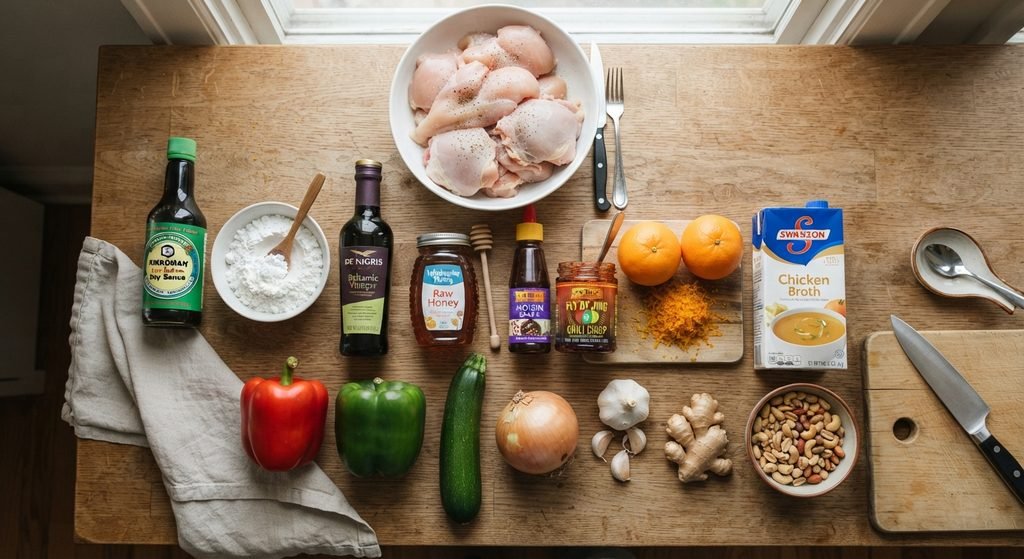
Ingredients
- Chicken breasts (or chicken thighs)
- Low-sodium soy sauce
- Cornstarch
- Balsamic vinegar (or rice vinegar or Chinese black vinegar)
- Honey
- Hoisin sauce
- Chili crisp
- Orange (juice and zest)
- Chicken broth
- Red and green bell peppers
- Zucchini
- Onion
- Garlic
- Ginger (or ginger paste)
- Roasted salted peanuts (or cashews)
How to Make Kung Pao Chicken Stir Fry
Step 1. Cut the chicken breasts or thighs into bite-sized pieces. Combine the chicken with soy sauce and cornstarch to create a simple alcohol-free marinade that helps coat the chicken evenly.
Step 2. Allow the chicken to marinate while you prepare the vegetables.
Step 3. Cut the red and green bell peppers into large squares. Keeping the pieces relatively large helps preserve their texture and gives the finished stir fry a colorful appearance.
Step 4. Chop the zucchini into larger bite-sized pieces. Zucchini cooks more quickly than bell peppers, so larger pieces help prevent it from becoming overly soft.
Step 5. Chop approximately ½ cup of onion and set it aside with the other prepared vegetables.
Step 6. Heat a large skillet or wok with a little cooking oil. Add the marinated chicken, leaving enough space between the pieces to allow them to brown evenly.
Step 7. Turn each piece of chicken to cook the opposite side. Once the chicken is cooked through, transfer it to a plate.
Step 8. Add a little more cooking oil to the same skillet, followed by the bell peppers, zucchini, and onion. Sauté the vegetables until they begin to soften while retaining some firmness.
Step 9. Add the garlic and ginger after a couple of minutes. Stir them into the vegetables to distribute their aromatic flavors throughout the skillet.
Step 10. Return the cooked chicken to the skillet. Add the prepared sauce made with soy sauce, balsamic vinegar, honey, hoisin sauce, chili crisp, orange juice, orange zest, and chicken broth. Stir until the chicken and vegetables are evenly coated.
Step 11. Add the roasted salted peanuts toward the end of cooking. Stir everything together and serve warm with your preferred rice.

Serving Suggestions
Kung Pao Chicken pairs particularly well with freshly cooked white rice. The rice absorbs the savory sauce and balances the combination of sweet, tangy, and spicy flavors.
Brown rice offers a slightly nutty flavor and a firmer texture, while basmati rice brings a fragrant element to the meal.
Cauliflower rice is another option if you enjoy serving stir fries with vegetables instead of traditional rice.
For an everyday dinner, divide the rice between serving bowls and spoon the chicken, vegetables, peanuts, and sauce over the top. Make sure each serving contains a mixture of colorful vegetables and crunchy peanuts.
Pro Tips for Best Results
- Cut the chicken into evenly sized pieces for consistent cooking.
- Prepare all the vegetables before starting the stir fry.
- Keep zucchini pieces larger than the other vegetables.
- Avoid overcrowding the skillet when browning the chicken.
- Add garlic and ginger after the vegetables begin cooking.
- Stir in the roasted peanuts near the end to preserve their crunch.
- Use low-sodium soy sauce to help balance the salty ingredients.
Common Mistakes to Avoid
1. Overcrowding the Skillet
Adding too much chicken at once can cause moisture to accumulate in the skillet, making it more difficult for the chicken to develop a browned exterior. Leave enough space between the pieces during cooking.
2. Cutting the Zucchini Too Small
Small zucchini pieces soften quickly and may lose their shape. Cutting the zucchini into larger chunks helps it retain its texture while the other vegetables cook.
3. Cutting the Bell Peppers Too Finely
Finely diced bell peppers can become soft during stir-frying. Larger squares provide a more noticeable texture and maintain the colorful appearance of the dish.
4. Adding the Garlic Too Early
Garlic can brown more quickly than the other vegetables. Add it alongside the ginger after the vegetables have started cooking to preserve its aromatic flavor.
5. Skipping the Chicken Marinade
The marinade helps distribute flavor and gives the chicken a light cornstarch coating. Allow the chicken to sit in the marinade while preparing the vegetables.
6. Adding the Peanuts Too Early
Peanuts may soften when exposed to the sauce for too long. Stirring them in near the end preserves their crunchy texture and creates a pleasant contrast with the chicken and vegetables.
Variations & Substitutions
- Chicken thighs: Replace chicken breasts with boneless chicken thighs for a richer flavor.
- Cashews: Substitute roasted cashews for peanuts.
- Different vegetables: Add broccoli or water chestnuts for additional texture.
- Vinegar alternatives: Replace balsamic vinegar with rice vinegar or Chinese black vinegar.
- Ginger paste: Use ginger paste instead of fresh ginger.
- Extra spice: Adjust the amount of chili crisp according to your taste.
- Without orange: Leave out the orange juice and zest for a sauce without citrus notes.
Storage & Reheating
Refrigerator
Transfer leftover Kung Pao Chicken to a covered, airtight container and refrigerate promptly. Store the rice separately if possible to help preserve its texture.
Freezer
The supplied recipe does not include specific freezing instructions. Vegetables such as zucchini may become softer after freezing and thawing.
Reheating
Reheat the leftovers in a skillet or microwave until heated thoroughly. Stir occasionally to distribute the sauce evenly.
Exact storage durations and reheating times are not available in the supplied recipe.
Nutrition Information
| Nutrient | Amount per Serving |
|---|---|
| Calories | 390 kcal |
| Total Fat | 19 g |
| Saturated Fat | 3 g |
| Carbohydrates | 24 g |
| Fiber | 4 g |
| Sugar | 13 g |
| Protein | 31 g |
| Sodium | 780 mg |
Frequently Asked Questions
Can I make this recipe ahead of time?
You can prepare the vegetables and marinate the chicken before beginning the cooking process. Keep the raw chicken refrigerated while preparing the remaining ingredients. Having everything ready before cooking makes it easier to follow the stir-fry sequence without interruptions.
How long does it last in the fridge?
The supplied recipe does not specify an exact refrigerator storage duration. Store leftovers promptly in an airtight container in the refrigerator.
Can I freeze this recipe?
Specific freezing instructions are not provided. Keep in mind that the bell peppers and zucchini may lose some of their firmness after freezing and reheating.
What can I substitute for one ingredient?
Chicken thighs can replace chicken breasts, while roasted cashews can be used instead of peanuts. Rice vinegar or Chinese black vinegar can replace balsamic vinegar. Ginger paste is also a suitable alternative to fresh ginger. You can omit the orange juice and zest if you prefer a sauce without citrus flavor.
Why didn’t my recipe turn out as expected?
Overcrowding the skillet, cutting the vegetables too small, or cooking them for too long can affect the finished texture. Adding the peanuts too early may also reduce their crunch. Prepare the ingredients in advance and follow the cooking sequence carefully to maintain the balance between tender chicken and crisp vegetables.
Final Thoughts
This easy Kung Pao Chicken stir fry combines familiar ingredients with a savory, sweet, tangy, and spicy sauce. The combination of tender chicken, colorful bell peppers, zucchini, aromatic garlic, ginger, and roasted peanuts creates a satisfying variety of flavors and textures.
Preparing the ingredients before heating the skillet makes the cooking process more manageable, especially on busy evenings. The sauce brings everything together, while the peanuts provide a final layer of crunch. Whether served with white rice, brown rice, basmati rice, or cauliflower rice, this Asian-inspired chicken recipe makes a comforting homemade dinner.

Easy Kung Pao Chicken Stir Fry
Equipment
- Large skillet or wok
- Cutting board
- Chef’s Knife
- Mixing Bowls
- Measuring Spoons
- Cooking spatula
- Plate
Ingredients
Chicken and Marinade
- Chicken breasts or boneless chicken thighs, cut into bite-sized pieces
- Low-sodium soy sauce
- Cornstarch
Kung Pao Sauce
- Low-sodium soy sauce
- Balsamic vinegar or rice vinegar or Chinese black vinegar
- Honey
- Hoisin sauce
- Chili crisp adjust to taste
- Orange juice and zest
- Chicken broth
Stir Fry
- Cooking oil as needed
- Red bell pepper cut into large squares
- Green bell pepper cut into large squares
- Zucchini cut into large bite-sized pieces
- 1/2 cup Onion chopped, approximately
- Garlic minced
- Ginger minced, or use ginger paste
- Roasted salted peanuts or roasted cashews
For Serving
- Cooked rice white rice, brown rice, basmati rice, or cauliflower rice
Instructions
- Cut the chicken breasts or thighs into evenly sized bite-sized pieces. Combine the chicken with low-sodium soy sauce and cornstarch in a mixing bowl until evenly coated.
- Allow the chicken to marinate in the refrigerator while preparing the vegetables.
- Cut the red and green bell peppers into large squares to help preserve their texture during cooking.
- Chop the zucchini into large bite-sized pieces to prevent it from becoming overly soft during stir-frying.
- Chop approximately 1/2 cup of onion. Prepare the garlic and ginger and set them aside.
- In a separate mixing bowl, combine the soy sauce, balsamic vinegar, honey, hoisin sauce, chili crisp, orange juice, orange zest, and chicken broth. Mix well and set aside.
- Heat a little cooking oil in a large skillet or wok. Add the marinated chicken in a single layer, leaving enough space between the pieces for even browning.
- Turn the chicken pieces and continue cooking until browned and fully cooked through, reaching an internal temperature of 165°F (74°C). Transfer the chicken to a clean plate.
- Add a little more cooking oil to the same skillet. Add the red and green bell peppers, zucchini, and onion. Sauté until the vegetables begin to soften while retaining some firmness.
- After a couple of minutes, add the garlic and ginger. Stir until fragrant and evenly distributed throughout the vegetables.
- Return the cooked chicken to the skillet and pour in the prepared Kung Pao sauce. Stir until the chicken and vegetables are evenly coated and the sauce is heated through.
- Add the roasted salted peanuts toward the end of cooking. Toss everything together to combine while preserving the crunch of the peanuts.
- Serve warm over freshly cooked rice, making sure each serving contains chicken, colorful vegetables, roasted peanuts, and plenty of sauce.
Notes
- Cut the chicken into evenly sized pieces for consistent cooking.
- Prepare all ingredients before heating the skillet.
- Keep zucchini pieces larger to prevent overcooking.
- Avoid overcrowding the skillet when browning the chicken. Cook in batches if necessary.
- Add garlic and ginger after the vegetables begin cooking to prevent burning.
- Add roasted peanuts near the end to preserve their crunch.
- Use low-sodium soy sauce to balance the salty ingredients.
- Chicken thighs can replace chicken breasts.
- Roasted cashews can replace peanuts.
- Broccoli or water chestnuts can be added for extra texture.
- Adjust the chili crisp according to your preferred spice level.
- Omit the orange juice and zest if you prefer a sauce without citrus notes.
- Refrigerate leftovers promptly in an airtight container. Store the rice separately when possible.
- Reheat leftovers in a skillet or microwave until thoroughly heated.
- Vegetables may lose some firmness after freezing and thawing.