
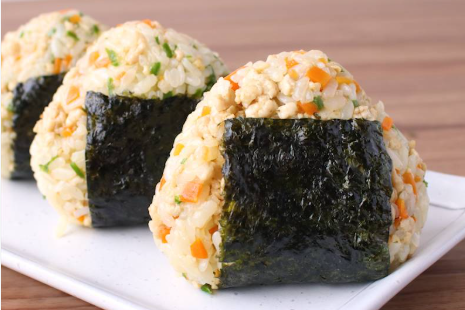
Warm Japanese short-grain rice holds together when gently pressed, making it a good base for these handheld rice balls. In Chicken Soboro Onigiri, ground chicken is browned in a skillet and cooked with soy sauce, mirin, sugar, and sake. The savory-sweet crumbles are folded through the rice before it’s shaped into triangles. Each triangle gets a strip of roasted nori just before serving. With the rice already cooked, the recipe takes 20 minutes and makes six.
Why You’ll Love This Recipe — Chicken Soboro Onigiri
The chicken browns and takes on its seasoning in the same skillet, so there’s only one pan to watch. Breaking the meat into fine crumbles helps it spread through all six portions, giving the rice a little sweetness and savory depth in each bite. The warm short-grain rice gives the triangles a soft, cohesive texture, and the roasted nori adds a crisp edge and makes them easy to pick up.
Kitchen Tools You’ll Need
- Skillet
- Spatula
- Large mixing bowl
- Kitchen scale
- Measuring spoons
Ingredients
- 600 g cooked Japanese short-grain rice
- 100 g ground chicken (thigh, breast, or a mix)
- 1 teaspoon cooking oil
- 1 tablespoon Japanese soy sauce (koikuchi shoyu)
- 1½ teaspoons mirin
- 1 teaspoon sugar
- 1 teaspoon sake
- 6 strips roasted nori (1 full sheet cut into 6 strips)

How to Make Chicken Soboro Onigiri
Step 1. Heat a skillet over medium-high heat. Add the cooking oil and ground chicken, then break up the meat with a spatula as it cooks. Aim for small, loose pieces so the chicken will fold easily into the rice later. Sauté until the crumbles are browned. Browning builds flavor in the meat before the soy sauce and other seasonings go into the skillet.
Step 2. Stir in the Japanese soy sauce, mirin, sugar, and sake. As the seasonings cook down, they coat the chicken and give it the sweet-savory flavor of soboro. Watch the bottom of the skillet as you stir. The chicken should look coated, with no puddle of seasoning left in the pan. Once the liquid has evaporated, take the skillet off the heat.
Step 3. Put the warm cooked rice in a large mixing bowl and fold in the seasoned chicken. Look for crumbles throughout the bowl before dividing the mixture. The meat can collect in one spot when it first goes in, so mix until the rice and chicken are evenly distributed. Divide the mixture into six equal portions so each rice ball is about the same size.
Step 4. Gently press each portion into a triangle using an onigiri mold, or shape it by hand. Use just enough pressure to bring the grains together and give the triangle edges that hold. The finished shape should feel sturdy enough to lift, with the individual grains still visible.
Step 5. Wrap each triangle with one strip of roasted nori and serve right away. Wrapping at the end preserves the nori’s crisp texture for serving and gives each rice ball a convenient place to grip.

Serving Suggestions
Serve the onigiri as a handheld lunch while the rice is still warm and the nori has a little crispness. For an individual plate, place the triangles with the nori-covered edge facing out so they’re easy to pick up. If you’re sharing the batch, set all six on a platter where everyone can take one by the wrapped edge. The same shape also fits neatly into a bento-style lunch served right after assembly. Since the chicken is mixed throughout the rice, each triangle has the soy-and-mirin seasoning from edge to center.
Pro Tips for Best Results
- Check the weight after cooking. The 600 g refers to cooked rice.
- Use the rice while it’s warm. The grains cling together more easily when you shape the triangles.
- Judge the soboro by the pan. A light sheen on the chicken is fine. Any liquid that pools when you move the crumbles aside still needs to cook off.
- Let the nori go on last. Roasted seaweed softens as it absorbs moisture from the rice.
Common Mistakes to Avoid
- Using long-grain rice. Separate, fluffy grains are harder to press into a cohesive triangle. Cooked Japanese short-grain rice has the stickiness this recipe relies on, especially once the chicken is mixed in.
- Leaving the chicken in large pieces. Big clumps are difficult to distribute evenly through the bowl and can interrupt the shape of the triangle. Break the meat into small crumbles as it cooks in the skillet.
- Taking the chicken off the heat too soon. Liquid left in the pan can make parts of the rice mixture wet and harder to shape. Keep cooking the seasoned chicken until the liquid has evaporated.
- Mixing after the rice has cooled. Cool rice can be harder to press together. Combine the cooked rice and seasoned chicken while the rice is still warm.
- Dividing the mixture as you shape. The last triangle can end up noticeably smaller if the first few use more of the mixture. Divide the bowl into six equal portions before shaping the first one.
- Packing the mold too firmly. Heavy pressure can crush the rice grains and make the center dense. Press gently until the edges stay together and the triangle can be lifted.
Variations & Substitutions
Use ground chicken thigh for a richer flavor, ground breast for a milder one, or a mix of the two. Each option uses the same 100 g of ground chicken and follows the same directions.
Storage & Reheating
Refrigerate. If you have leftovers, cool the rice balls quickly, refrigerate them, and use them within 24 hours. The rice firms up in the fridge, so freezing is better for preserving its texture.
Freeze. Wrap each rice ball individually before adding the nori. Cool the wrapped rice balls quickly, then transfer them to a freezer bag. Freeze for up to one month and use within two weeks for the best texture.
Reheat. Remove the plastic wrap and microwave the onigiri straight from frozen until steaming hot throughout. Add a fresh strip of nori just before serving so it stays crisp.
Nutrition Information
Per serving, 1 rice ball (114 g):
| Nutrient | Amount |
|---|---|
| Calories | 199 kcal |
| Total Fat | 3 g |
| Saturated Fat | 0.8 g |
| Carbohydrates | 38.7 g |
| Fiber | 1.7 g |
| Sugar | 1.1 g |
| Protein | 5.9 g |
| Sodium | 184 mg |
Frequently Asked Questions
Can I make this recipe ahead of time?
The directions start with cooked rice and call for it to be warm when you mix in the chicken. Plan to shape the rice balls and add the nori close to serving.
How long does it last in the fridge?
A refrigerator shelf life is unavailable for this version. The directions call for serving the rice balls right after wrapping.
Can I freeze this recipe?
Can I freeze this recipe?
Yes. Wrap each rice ball individually in plastic wrap before adding the nori. Let the wrapped rice balls cool quickly, then transfer them to a freezer bag. Freeze for up to one month, or use within two weeks for the best texture. Microwave straight from frozen until steaming hot throughout, then add a fresh strip of nori just before serving.
What can I substitute for one ingredient?
Use 100 g of ground chicken thigh in place of ground chicken breast, or use a mix of both. Ground thigh gives the soboro a slightly richer flavor. Keep the same measurements for the seasonings.
Why didn’t my recipe turn out as expected?
If the triangles crumbled, check that you used Japanese short-grain rice and that it was still warm when you shaped it. If the mixture felt wet, some of the seasoning liquid may have remained in the skillet. A dense, compact center usually means the rice was pressed too firmly. Use gentle pressure and stop once the triangle holds its shape.
Final Thoughts
This lunch comes together in a skillet and a mixing bowl. Browning the chicken first gives the soboro its savory base, while soy sauce, mirin, sugar, and sake season the crumbles as the liquid cooks away. The warm rice shapes easily once the chicken is folded through it. Each of the six triangles has soft rice, small pieces of seasoned chicken, and a crisp strip of nori when served right away.

Chicken Soboro Onigiri
Equipment
- Skillet
- Spatula
- Large Mixing Bowl
- Kitchen Scale
- Measuring Spoons
Ingredients
Rice and Chicken
- 600 g cooked Japanese short-grain rice warm; weight measured after cooking
- 100 g ground chicken thigh, breast, or a mix
- 1 tsp cooking oil
Soboro Seasoning
- 1 tbsp Japanese soy sauce koikuchi shoyu
- 1 1/2 tsp mirin
- 1 tsp sugar
- 1 tsp sake
For Wrapping
- 6 strips roasted nori 1 full sheet cut into 6 strips
Instructions
- Heat a skillet over medium-high heat. Add the cooking oil and ground chicken, then break up the meat with a spatula as it cooks. Aim for small, loose pieces so the chicken will fold easily into the rice later. Sauté until the crumbles are browned. Browning builds flavor in the meat before the soy sauce and other seasonings go into the skillet.
- Stir in the Japanese soy sauce, mirin, sugar, and sake. As the seasonings cook down, they coat the chicken and give it the sweet-savory flavor of soboro. Watch the bottom of the skillet as you stir. The chicken should look coated, with no puddle of seasoning left in the pan. Once the liquid has evaporated, take the skillet off the heat.
- Put the warm cooked rice in a large mixing bowl and fold in the seasoned chicken. Look for crumbles throughout the bowl before dividing the mixture. The meat can collect in one spot when it first goes in, so mix until the rice and chicken are evenly distributed. Divide the mixture into six equal portions so each rice ball is about the same size.
- Gently press each portion into a triangle using an onigiri mold, or shape it by hand. Use just enough pressure to bring the grains together and give the triangle edges that hold. The finished shape should feel sturdy enough to lift, with the individual grains still visible.
- Wrap each triangle with one strip of roasted nori and serve right away. Wrapping at the end preserves the nori’s crisp texture for serving and gives each rice ball a convenient place to grip.
Notes
- Measure cooked rice: The 600 g refers to rice after cooking, not dry rice.
- Use warm rice: Warm Japanese short-grain rice sticks together more easily and helps the triangles hold their shape.
- Break up the chicken: Cook the ground chicken into small, even crumbles so the seasoning and meat distribute throughout the rice.
- Evaporate the liquid: Cook the soboro until no seasoning liquid remains pooled in the skillet. Excess liquid can make the rice difficult to shape.
- Shape gently: Avoid pressing too firmly, which can crush the rice grains and create a dense center.
- Add nori last: Wrap the rice balls just before serving to preserve the roasted seaweed’s crispness.