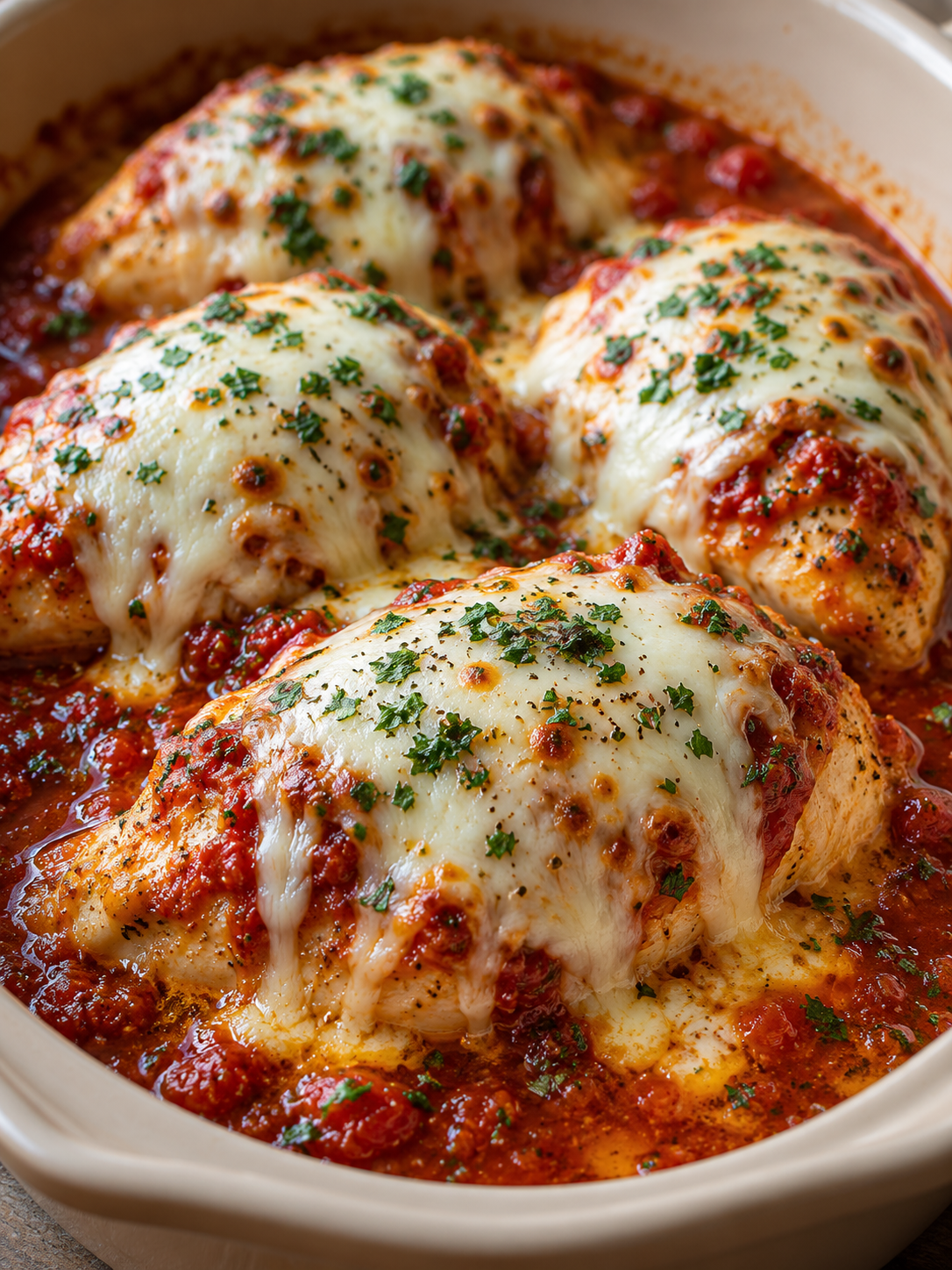


Balsamic vinegar and a little honey make a glossy glaze that clings to chicken and leaves enough sauce in the skillet to spoon over dinner. This balsamic chicken breast recipe starts with a quick sear, then finishes uncovered in the oven with fresh rosemary. Garlic and stone-ground mustard give the glaze a savory edge. The recipe serves four, and the same skillet you use to brown the chicken goes straight into the oven
Why You’ll Love This Recipe Balsamic Chicken Breast
The chicken and glaze come together in the same pan, so the browned bits left by the chicken become part of the sauce. Honey softens the tartness of the balsamic vinegar, while mustard adds a little sharpness of its own. A cornstarch slurry thickens the glaze enough to coat the chicken. The glaze continues to thicken during the short rest, which gives you time to bring the rest of dinner to the table.
Kitchen Tools You’ll Need
- Cutting board
- Plastic wrap
- Meat mallet
- Paper towels
- Large oven-safe skillet
- Tongs
- Plate
- Measuring cups and spoons
- Small bowl
- Whisk
- Spoon
- Instant-read thermometer
Ingredients
- 1½ to 2 pounds boneless, skinless chicken breasts (4 pieces)
- 1 teaspoon kosher salt
- ½ teaspoon freshly ground black pepper, plus more to taste
- 1½ teaspoons Italian seasoning
- 2 tablespoons extra-virgin olive oil
- 2 tablespoons butter
- 1 teaspoon minced garlic
- ½ cup water
- ⅓ cup balsamic vinegar
- 2 teaspoons honey
- 1 tablespoon stone-ground mustard or Dijon mustard
- 1 tablespoon cornstarch
- 1 tablespoon water
- 3 or 4 sprigs fresh rosemary

How to Make Balsamic Chicken Breast
Step 1. Preheat the oven to 425°F.
Step 2. Set any thick chicken breasts on a cutting board and cover them with plastic wrap. Use the flat side of a meat mallet to pound them lightly to an even thickness of ¾ inch or less. Halve very large breasts if needed to make serving-size pieces.
Step 3. Blot the chicken with paper towels, then season both sides with kosher salt, black pepper, and Italian seasoning.
Step 4. Heat the olive oil in a large oven-safe skillet over medium-high heat. Once the oil is hot, sear the chicken until golden on both sides, about 3 minutes per side. The chicken will finish cooking in the oven. Take the skillet off the heat and move the chicken to a plate.
Step 5. Add the butter to the skillet and set it over low heat. Once it melts, stir in the garlic and cook until fragrant, 1 to 2 minutes. Whisk in the ½ cup water, balsamic vinegar, honey, mustard, and additional black pepper to taste. In a small bowl, stir the cornstarch into the remaining 1 tablespoon water until smooth. Whisk the slurry into the skillet, simmer for 1 to 2 minutes until the glaze thickens, then remove the skillet from the heat.
Step 6. Put the seared chicken and any juices from the plate back into the skillet. Spoon glaze over each piece and lay the rosemary sprigs on top.
Step 7. Bake uncovered for about 12 to 15 minutes. Check the thickest part of the chicken with an instant-read thermometer and remove the skillet from the oven when the chicken reaches 165°F.
Step 8. Let the chicken rest for 5 to 10 minutes. The glaze will thicken a little more as it rests.
Step 9. Serve the chicken with the balsamic pan glaze spooned over each portion.

Serving Suggestions
Serve the chicken with potatoes, rice, or pasta and spoon a little extra balsamic glaze over the side. Parsley potatoes are a good choice when you want the rosemary and balsamic flavors to stand out. Rice pilaf will catch the sauce that runs off the chicken, and orzo works well if you prefer pasta. For a vegetable side, try green beans or a crisp salad. If you’re serving the chicken sliced, arrange the pieces on the plate before spooning over the glaze so some sauce settles between the slices.
Pro Tips for Best Results
- Measure the two amounts of water separately. The ½ cup goes into the balsamic mixture, and the tablespoon is for the cornstarch slurry.
- Use the garlic’s aroma as your cue to proceed to the next step. It only needs a minute or two over low heat.
- Save the juices from the plate and pour them back into the pan with the chicken.
Common Mistakes to Avoid
- Leaving one end of the breast much thicker. The thinner end can finish first and dry out while the center is still cooking. Pound thick breasts to an even ¾ inch or less.
- Seasoning damp chicken. Surface moisture slows browning. Pat the breasts dry with paper towels before adding the seasoning.
- Cooking the chicken through during the sear. The chicken gets a second round of heat in the oven. Transfer it to a plate as soon as both sides are golden.
- Keeping the skillet on high heat for the garlic. The minced garlic can brown too fast and turn bitter. Move the skillet off the heat after searing, then return it to low when you add the butter.
- Whisking dry cornstarch straight into the pan. It can clump when it hits the hot liquid. Mix it with the tablespoon of water in a separate bowl first.
- Slicing the chicken as soon as it comes out of the oven. The glaze can still be loose at that point. Give it the full 5 to 10 minutes to settle and thicken before serving.
Variations & Substitutions
Dijon works in place of stone-ground mustard. Jarred minced garlic can stand in for freshly minced cloves, and fresh thyme sprigs can replace the rosemary. Boneless, skinless thighs are another option. Check their internal temperature for doneness, since their thickness can differ from the breasts.
Storage & Reheating
Refrigerate the cooked chicken in an airtight container for up to 4 days. Reheat it with some of the glaze in a microwave or in a skillet over low heat. The glaze firms up in the refrigerator and loosens as it warms. If it’s still thicker than you want, stir in a splash of water.
Nutrition Information
| Nutrient | Per serving |
|---|---|
| Calories | 350 kcal |
| Total Fat | 17 g |
| Saturated Fat | 6 g |
| Carbohydrates | 10 g |
| Fiber | 1 g |
| Sugar | 6 g |
| Protein | 37 g |
| Sodium | 873 mg |
Frequently Asked Questions
Can I make this recipe ahead of time?
You can cook the dish ahead and refrigerate the chicken with its glaze. When you’re ready to serve, warm the chicken with some sauce spooned over it. The glaze will loosen as it heats.
How long does it last in the fridge?
The cooked chicken keeps for up to 4 days in an airtight container in the refrigerator. Store the glaze with it so you have sauce to spoon over the chicken when reheating.
Can I freeze this recipe?
Freezer instructions are unavailable for this recipe. For leftovers you plan to eat within four days, follow the refrigerator storage instructions above.
What can I substitute for one ingredient?
Use Dijon if you’re out of stone-ground mustard. Both work in the balsamic glaze. Dijon gives it a smoother texture, while stone-ground mustard can leave visible flecks.
Why didn’t my recipe turn out as expected?
If the chicken came out dry, check the thickness of the breasts and how long they stayed in the skillet before baking. The sear is just for browning. If the glaze was lumpy, make sure the cornstarch was fully mixed with water before you whisked it into the pan.
Final Thoughts
This dinner comes together around the few minutes it takes to build the glaze while the seared chicken rests on a plate. The vinegar gives the sauce its tang, honey rounds it out, and rosemary adds fragrance as the chicken finishes in the oven. The final rest gives the glaze time to settle into a consistency you can spoon over each serving. With rice or potatoes and a green vegetable alongside, there’s a place for every spoonful left in the skillet.

Balsamic Chicken Breast
Equipment
- Cutting board
- Plastic Wrap
- Meat Mallet
- Paper Towels
- Large oven-safe skillet
- Tongs
- Plate
- Measuring cups and spoons
- Small Bowl
- Whisk
- Spoon
- Instant-read thermometer
Ingredients
Chicken
- 1 1/2 to 2 pounds boneless, skinless chicken breasts 4 pieces
- 1 tsp kosher salt
- 1/2 tsp freshly ground black pepper plus more to taste for the glaze
- 1 1/2 tsp Italian seasoning
- 2 tbsp extra-virgin olive oil
Balsamic Glaze
- 2 tbsp butter
- 1 tsp minced garlic
- 1/2 cup water for the glaze
- 1/3 cup balsamic vinegar
- 2 tsp honey
- 1 tbsp stone-ground mustard or Dijon mustard
Cornstarch Slurry
- 1 tbsp cornstarch
- 1 tbsp water for the slurry
For Baking
- 3 to 4 sprigs fresh rosemary
Instructions
- Preheat the oven to 425°F.
- Cover any thick chicken breasts with plastic wrap on a cutting board. Use the flat side of a meat mallet to pound them to an even thickness of ¾ inch or less. Halve very large breasts if needed to make serving-size pieces.
- Pat the chicken dry with paper towels. Season both sides with the kosher salt, ½ teaspoon black pepper, and Italian seasoning.
- Heat the olive oil in a large oven-safe skillet over medium-high heat. Sear the chicken until golden, about 3 minutes per side. Remove the skillet from the heat and transfer the chicken to a plate. It will finish cooking in the oven.
- Add the butter to the skillet and return it to low heat. Once the butter melts, stir in the garlic and cook until fragrant, 1 to 2 minutes. Whisk in the ½ cup water, balsamic vinegar, honey, mustard, and additional black pepper to taste. In a small bowl, stir the cornstarch into the remaining 1 tablespoon water until smooth. Whisk the slurry into the skillet and simmer for 1 to 2 minutes, until the glaze thickens. Remove the skillet from the heat.
- Return the chicken and any juices from the plate to the skillet. Spoon glaze over each piece and lay the rosemary sprigs on top.
- Bake uncovered for about 12 to 15 minutes, until an instant-read thermometer inserted into the thickest part of the chicken registers 165°F.
- Let the chicken rest for 5 to 10 minutes. The glaze will thicken slightly as it rests.
- Serve with the balsamic pan glaze spooned over each portion.