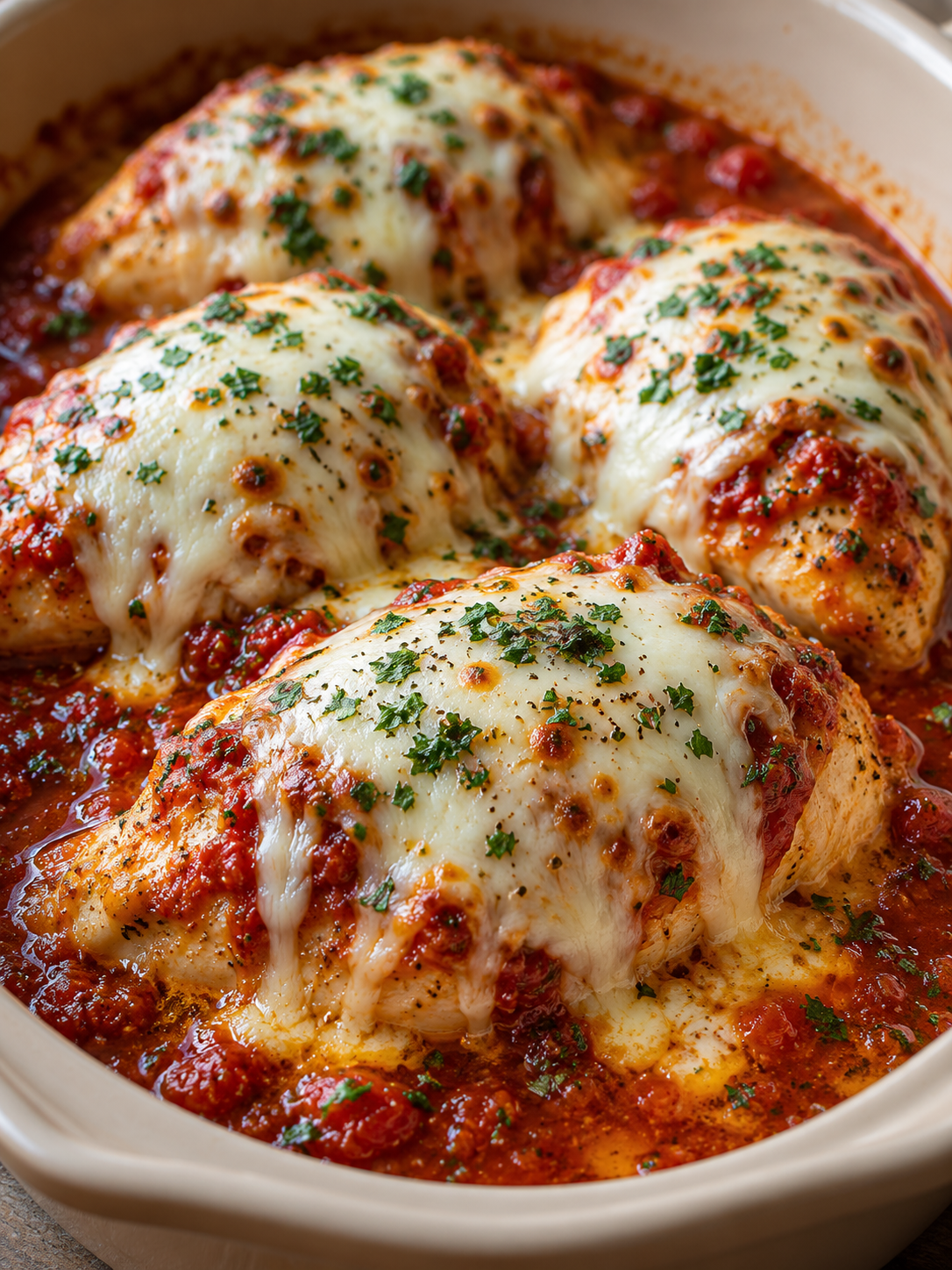

A good tomato sauce starts before the tomatoes go into the pan. For this chicken cacciatore, seared thighs leave browned bits behind, and a splash of dry white wine loosens them so they can flavor the sauce. Crushed tomatoes give it body, while mushrooms bring an earthy note. The thighs finish cooking right in the sauce, so each piece is ready to spoon over pasta or polenta once it’s done.
Why You’ll Love This Recipe (Chicken Cacciatore)
This chicken cacciatore builds flavor in the same pan from the first sear to the final simmer. The tomatoes and mushrooms have time to cook together before the thighs go back in, so the sauce already has some body when you add the chicken. You can keep the thighs whole for plated portions or shred the meat so it’s easier to scoop up with the sauce. Either way, you get plenty of tomato and mushroom in each serving.
Kitchen Tools You’ll Need
- Skillet with a lid
- Plate
- Cooking spoon or spatula
Ingredients
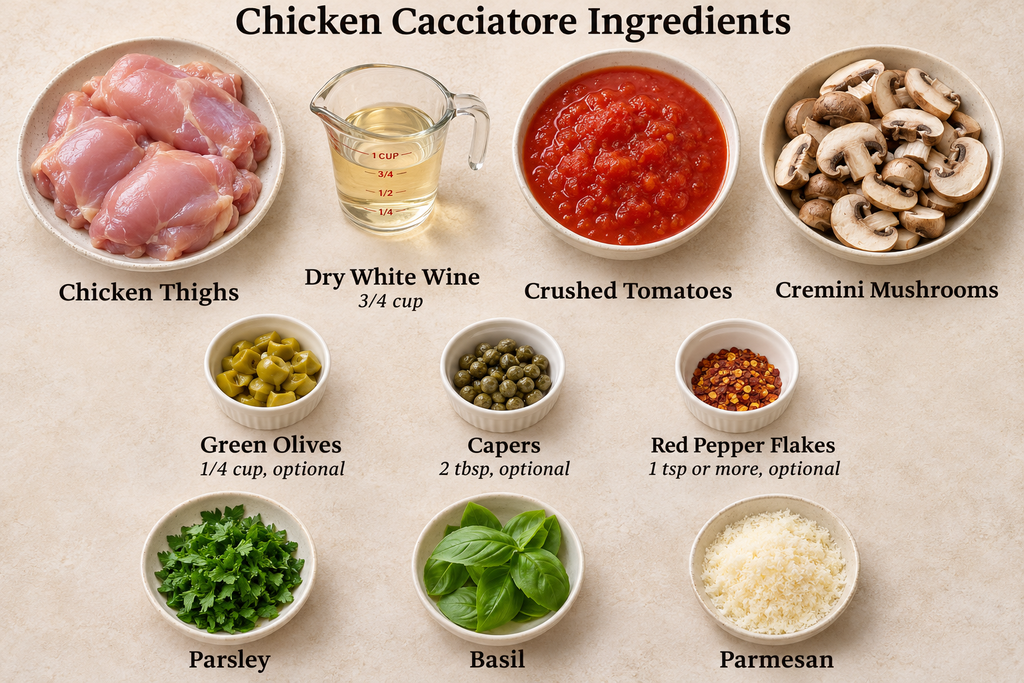
- Chicken thighs
- Dry white wine — ¾ cup
- Crushed tomatoes, with their juices
- Mushrooms — cremini (baby bella) or chopped portobello mushrooms
The method also calls for vegetables and aromatics, seasoning, and vinegar. The specific vegetables, aromatics, seasonings, and type of vinegar are unspecified. The directions suggest serving with parsley or fresh basil leaves and Parmesan. The remaining ingredient quantities are unspecified.
- Olives — ¼ cup chopped green olives, optional
- Capers — 2 tablespoons drained capers, optional
- Red pepper flakes — 1 teaspoon or more, optional
How to Make Chicken Cacciatore
Step 1. Season the chicken thighs and sear them in the skillet until they develop a browned surface. The color is the cue to look for at this stage. Transfer the thighs to a plate once they’re browned. The chicken will finish cooking later, after the sauce has had a chance to reduce. Keep the browned bits in the skillet so they can go into the sauce when you deglaze the pan.
Step 2. Sauté the vegetables and aromatics in the same skillet until tender. Pour in the dry white wine, then scrape the bottom of the pan with a spoon or spatula to release the browned bits. As they loosen, stir them into the liquid. This carries the flavor from the seared chicken into the sauce and gives the wine a chance to mingle with the vegetables before the tomatoes go in.
Step 3. Stir in the crushed tomatoes and their juices, mushrooms, seasoning, and vinegar. Let the mixture simmer so it can reduce. The sauce should look less loose as it cooks, and the mushrooms will add an earthy flavor to the tomato base. Give the sauce this time on its own before returning the chicken to the skillet.
Step 4. Lay the thighs in the tomato sauce and simmer with the skillet partially covered until the chicken is cooked through. Once it’s done, decide how you want to serve it. Leave the thighs whole and spoon the sauce and mushrooms over each piece, or dice or shred the chicken so you can serve it in smaller bites. Finish with parsley or fresh basil leaves and Parmesan, if you like.

Serving Suggestions
Spaghetti works well if you want the tomato sauce to coat long strands of pasta. If you’re serving the chicken diced or shredded, try rigatoni or penne. The short shapes make it easy to pick up a bite of chicken and mushroom along with the pasta. Orzo and brown rice also give the sauce something to soak into.
For a softer base, spoon the cacciatore over creamy polenta or mashed potatoes. Both work especially well with a whole thigh and a spoonful of sauce over the top. Parmesan risotto or mushroom risotto is another option if you want to serve the chicken alongside a creamy rice dish.
Pro Tips for Best Results
- Choose a dry white wine. Pinot Grigio, Sauvignon Blanc, dry Riesling, and dry Chardonnay all fit the recipe.
- Keep the tomato juices. They go into the skillet with the crushed tomatoes and form the base of the sauce.
- Use the lid position as a cue. Keep the skillet partially covered during the final simmer so some steam can escape as the thighs cook.
Common Mistakes to Avoid
- Moving the chicken to the plate before it browns. The browned surface adds flavor to the thighs and leaves flavorful bits in the skillet. Look for visible color during the sear before setting the chicken aside.
- Adding the wine while the vegetables are still firm. The directions call for sautéing the vegetables until tender first. Give them time to soften in the skillet before pouring in the wine.
- Leaving the browned bits stuck to the pan. Wine helps loosen them, but they may still need a scrape. Run a spoon or spatula across the bottom of the skillet so those bits end up in the sauce.
- Returning the chicken before the sauce has reduced. The tomato mixture needs its own simmer to thicken. Let it lose some of its watery appearance before laying the thighs back in.
- Covering the skillet completely during the final simmer. A fully closed lid holds more steam in the skillet. Leave the lid slightly open as directed while the thighs finish cooking.
- Using the sauce’s appearance to judge the chicken. The sauce starts thickening before the thighs go back in, so its consistency tells you little about their doneness. Keep the chicken in the sauce until it’s cooked through.
Variations & Substitutions
Chicken breasts are an option if you prefer white meat. For the mushrooms, choose cremini or chopped portobello. Chopped green olives add a briny bite, while drained capers give the sauce a sharper, salty flavor. Use the optional red pepper flakes if you want some heat.
Storage & Reheating
Exact storage and reheating instructions are not available for this recipe.
Nutrition Information
Calories: 335 kcal
Total Fat: 14 g
Saturated Fat: 3 g
Carbohydrates: 16 g
Fiber: 4 g
Total Sugars: 8 g
Protein: 33 g
Frequently Asked Questions
Can I make this recipe ahead of time?
The recipe is written to go from searing to serving in one cooking session. It does not provide a separate make-ahead method.
How long does it last in the fridge?
A refrigerator storage duration was not provided for this recipe.
Can I freeze this recipe?
Freezing instructions were not provided for this recipe.
What can I substitute for one ingredient?
You can use chicken breasts in place of thighs if you prefer white meat. For the mushrooms, cremini and chopped portobello are both listed options. Both give the sauce an earthy flavor, and chopped portobello pieces can give it a chunkier texture.
Why didn’t my recipe turn out as expected?
If the sauce looked thin, check how much it reduced before you returned the thighs to the skillet. That first simmer gives the tomato mixture time to thicken. If the sauce tasted flat, think back to the deglazing step. Scraping up the browned bits after adding the wine brings the flavor from the sear into the tomato base.
Final Thoughts
The part that gives this chicken cacciatore its character happens early, when the wine lifts the browned bits from the bottom of the skillet. The crushed tomatoes and mushrooms then get their own simmer, and the chicken finishes cooking in the sauce. You can set a whole thigh over polenta and spoon the mushrooms on top, or dice the chicken so it’s easy to toss with penne. Parsley or basil adds a fresh finish, and a little Parmesan works with either serving style.

Chicken Cacciatore
Equipment
- Skillet with a lid
- Plate
- Cooking Spoon or Spatula
Ingredients
Main Ingredients
- chicken thighs Chicken breasts can be substituted if preferred.
- 3/4 cup dry white wine Such as Pinot Grigio, Sauvignon Blanc, dry Riesling, or dry Chardonnay.
- crushed tomatoes With their juices.
- mushrooms Cremini (baby bella) or chopped portobello mushrooms.
- vegetables Specific vegetables and quantities not provided.
- aromatics Specific aromatics and quantities not provided.
- seasoning Type and quantity not specified.
- vinegar Type and quantity not specified.
Optional Add-Ins
- 1/4 cup green olives Chopped, optional.
- 2 tbsp capers Drained, optional.
- 1 tsp red pepper flakes Or more, to taste. Optional.
Optional Garnishes
- fresh parsley For garnish, optional.
- fresh basil leaves For garnish, optional alternative to parsley.
- Parmesan cheese For serving, optional.
Instructions
- Season the chicken thighs and sear them in a skillet until they develop a nicely browned surface. Transfer the browned chicken to a plate, leaving the flavorful browned bits in the skillet. The chicken will finish cooking later in the sauce.
- Add the vegetables and aromatics to the same skillet and sauté until tender. Pour in the dry white wine and scrape the bottom of the skillet with a cooking spoon or spatula to release the browned bits. Stir them into the liquid to build flavor in the sauce.
- Stir in the crushed tomatoes along with their juices, mushrooms, seasoning, and vinegar. Let the mixture simmer until the sauce reduces and thickens slightly. The mushrooms will add an earthy flavor to the rich tomato base.
- Return the chicken thighs to the skillet, nestling them into the tomato and mushroom sauce. Partially cover the skillet and simmer until the chicken is fully cooked through. The chicken should reach an internal temperature of 165°F (74°C).
- Leave the chicken thighs whole for individual portions, or dice or shred the cooked chicken and stir it into the sauce for easier serving.
- Serve the chicken cacciatore over pasta, creamy polenta, mashed potatoes, rice, or risotto. Garnish with fresh parsley or basil leaves and Parmesan cheese, if desired.
Notes
- Choose a dry white wine such as Pinot Grigio, Sauvignon Blanc, dry Riesling, or dry Chardonnay.
- Allow the chicken to develop a browned surface before transferring it to a plate.
- Scrape the browned bits from the skillet when adding the wine to incorporate their flavor into the sauce.
- Keep all the juices from the crushed tomatoes to form the sauce base.
- Allow the tomato and mushroom mixture to reduce before returning the chicken to the skillet.
- Keep the skillet partially covered during the final simmer so some steam can escape.