
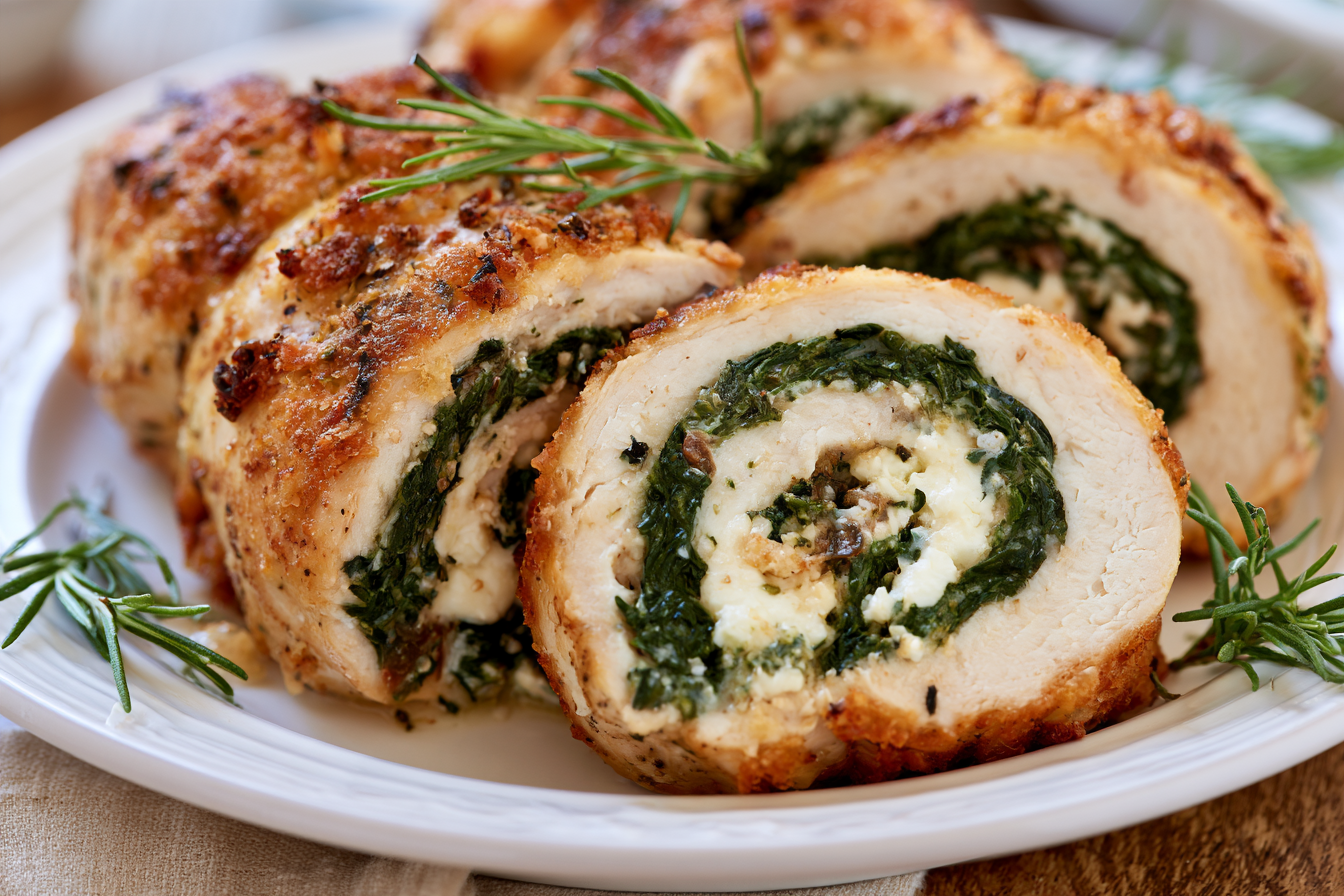
A golden chicken roll filled with spinach, feta, and Parmesan makes an elegant dinner without complicated preparation. This Chicken Roulade Recipe combines tender chicken breasts with a savory cheese filling, fragrant herb butter, and a light pan sauce. Each roulade is seared until golden, gently simmered, and sliced to reveal its colorful center. It’s a lovely way to turn familiar ingredients into a dinner that feels a little more special.
Why You’ll Love This Chicken Roulade Recipe
This Chicken Roulade Recipe brings together simple ingredients in a presentation that looks impressive on the plate. The feta adds a pleasantly tangy flavor, while Parmesan and garlic complement the spinach filling. Fresh parsley, thyme, and lemon zest give the herb butter a bright, aromatic finish. Searing creates a golden exterior, and gentle simmering helps the chicken cook evenly. The roulades also slice beautifully, making them suitable for family dinners or occasions when presentation matters.
Kitchen Tools You’ll Need
- Plastic wrap
- Meat mallet or rolling pin
- Mixing bowls
- Spoon
- Kitchen twine or toothpicks
- Large skillet with lid
- Wooden spoon
- Meat thermometer
- Knife
- Serving plate
Ingredients
Chicken and filling
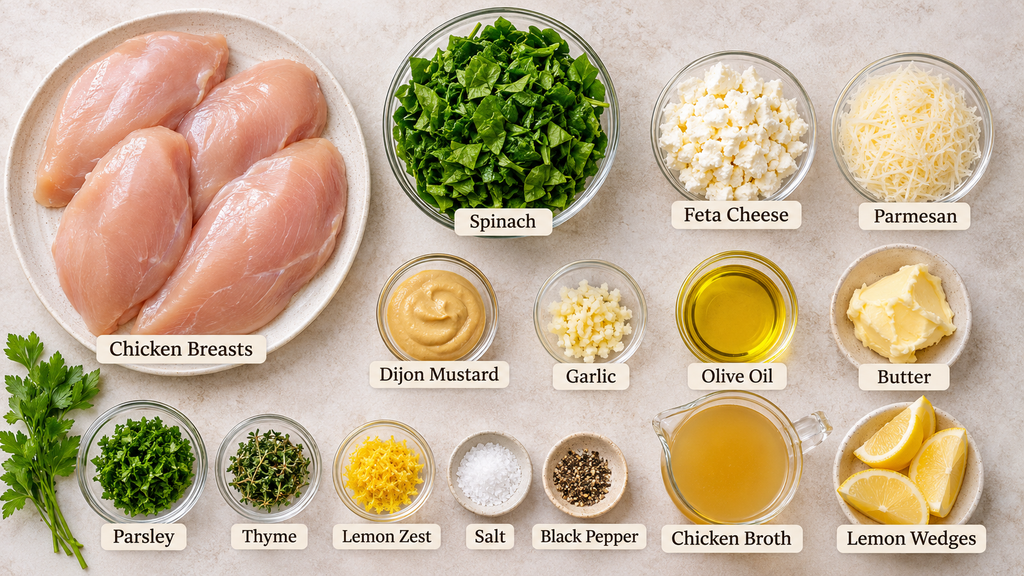
- 4 boneless, skinless chicken breasts, pounded to even thickness
- 1 cup fresh spinach, finely chopped, excess moisture pressed out
- 1/2 cup feta cheese, crumbled
- 2 tablespoons grated Parmesan
- 1 tablespoon Dijon mustard
- 1 clove garlic, minced
- Salt and freshly ground black pepper
- 2 tablespoons olive oil, divided
Herb butter
- 2 tablespoons softened unsalted butter
- 1 tablespoon chopped fresh parsley
- 1 teaspoon chopped fresh thyme or 1/2 teaspoon dried
- 1/2 teaspoon lemon zest
- Salt and pepper to taste
Optional finishing touches
- 1/4 cup dry white wine or chicken broth for deglazing
- Lemon wedges and extra parsley for serving
How to Make Chicken Roulade Recipe
Step 1. Place each chicken breast between two sheets of plastic wrap and gently pound with a meat mallet or rolling pin until it reaches an even thickness of approximately 1/2 inch. In a bowl, combine the finely chopped spinach, crumbled feta, grated Parmesan, Dijon mustard, minced garlic, salt, and freshly ground black pepper. Mix until the ingredients are evenly distributed. Make sure the spinach has been pressed to remove excess moisture. A relatively dry filling is easier to work with and helps prevent unwanted liquid from collecting inside the chicken.
Step 2. Combine the softened unsalted butter, chopped parsley, thyme, lemon zest, salt, and pepper in a small bowl. Stir until the herbs and seasonings are evenly incorporated into the butter. Spread a thin, even layer over each flattened chicken breast, leaving a small border around the edges. The butter should be soft enough to spread without pulling or tearing the chicken. This herb mixture adds flavor beneath the filling and brings a gentle citrus aroma to the finished roulades.
Step 3. Divide the prepared spinach and feta mixture evenly among the four chicken breasts. Arrange the filling in a horizontal line across the center of each piece. Starting from one short side, carefully roll the chicken around the filling, keeping the roll reasonably snug. Secure each roulade with kitchen twine or toothpicks so it maintains its shape during cooking. Avoid forcing the filling into an overly tight roll, which can cause some of the mixture to escape.
Step 4. Season the outside of the chicken roulades generously with salt and freshly ground black pepper. Heat one tablespoon of olive oil in a large skillet over medium-high heat. Add the secured roulades and sear for approximately 2 to 3 minutes per side, turning to develop a deep golden color around the exterior. The chicken should develop an appetizing browned surface while remaining intact. Searing builds flavor in both the roulades and the browned bits that will later contribute to the pan sauce.
Step 5. Pour the optional dry white wine or chicken broth into the skillet, using a wooden spoon to loosen the browned bits from the bottom. Allow the liquid to reduce slightly. Add enough water to reach approximately halfway up the chicken roulades. Bring the liquid to a gentle simmer, reduce the heat to low, and cover the skillet. Continue cooking for 8 to 10 minutes, or until the thickest part of the chicken reaches an internal temperature of 165°F. Check the temperature rather than relying on cooking time alone.
Step 6. Carefully transfer the cooked roulades to a warm plate and allow them to rest for 5 minutes. Resting gives the chicken juices time to settle, helping the meat remain moist when sliced. It also makes the rolled chicken easier to cut into neat portions without disturbing the spinach and feta filling. Remove all kitchen twine or toothpicks before serving.
Step 7. Increase the heat beneath the skillet and allow the remaining cooking liquid to simmer for another minute or two. As the liquid reduces, it should become slightly thicker and more concentrated in flavor. Taste the sauce and adjust the salt and pepper as needed. Spoon the finished pan sauce over the roulades for a glossy appearance and added moisture.
Step 8. Slice the rested chicken roulades diagonally to reveal the spinach and feta filling. Arrange the slices on serving plates, keeping the spiral pattern visible. Serve alongside roasted baby potatoes, a simple green salad, or grilled asparagus. Lemon wedges and extra parsley can be added as finishing touches. The combination creates an inviting dinner with contrasting colors, textures, and flavors.
Step 9. For consistent results, make sure the chicken is completely dry before searing and that the skillet is properly heated. These details encourage even browning. If preparing the roulades for later meals, allow the cooked chicken to cool fully before wrapping it tightly and refrigerating for up to three days. Reheat gently in a skillet or low oven to help preserve its texture.
Serving Suggestions
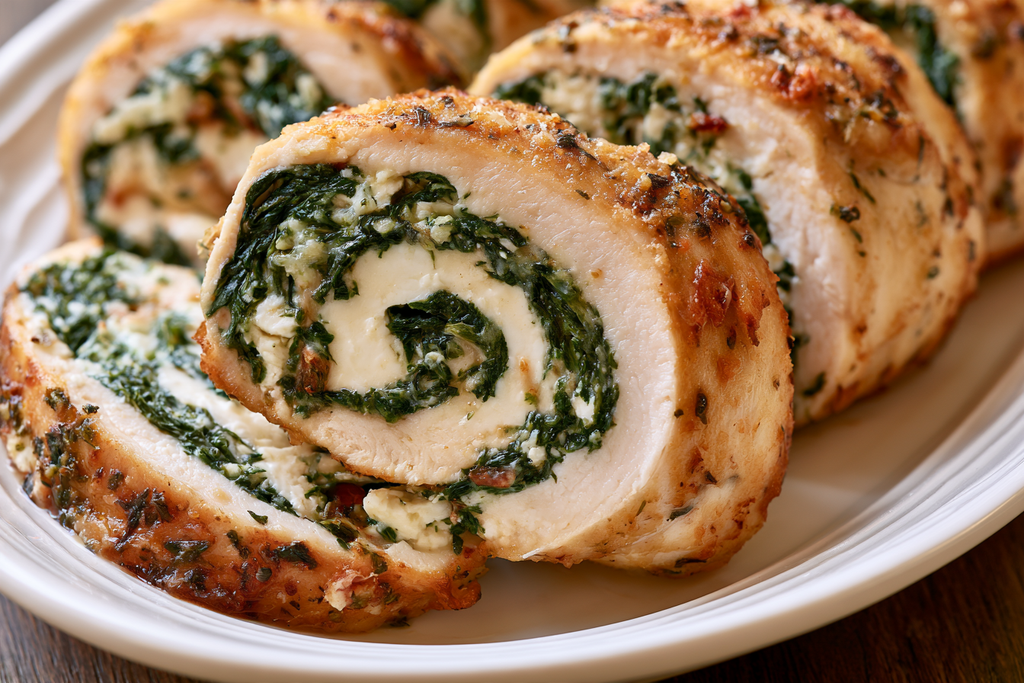
Chicken roulade makes an attractive centerpiece for a dinner where you want the main dish to look carefully prepared.
For a comforting meal, serve the sliced roulades with roasted baby potatoes. Their simple flavor works well with the feta filling and herb-seasoned chicken.
A green salad provides a lighter accompaniment, particularly when the chicken is finished with its flavorful pan sauce. Grilled asparagus is another fitting choice, adding color and a pleasant contrast in texture.
Arrange the chicken slices slightly overlapping so the spiral filling remains visible. Spoon a little pan sauce over the top, then finish with extra parsley and lemon wedges if desired.
Pro Tips for Best Results
- Keep the chicken evenly flattened. A consistent thickness makes rolling easier and encourages more even cooking.
- Remove moisture from the spinach. Excess water can make the filling loose and difficult to contain.
- Use softened herb butter. It spreads more easily and provides a more even coating.
- Secure each roulade carefully. Kitchen twine or toothpicks help maintain the rolled shape during searing and simmering.
- Watch the skillet temperature. Medium-high heat helps develop a golden exterior without immediately scorching the surface.
- Check the internal temperature. The chicken should reach 165°F before serving.
- Allow the chicken to rest. Five minutes of resting helps produce cleaner slices and retain moisture.
Common Mistakes to Avoid
1. Leaving the chicken too thick
Chicken breasts that are unevenly flattened can be difficult to roll and may cook inconsistently. Thicker sections also make it harder to distribute the filling neatly. Pound each breast gently until it reaches approximately 1/2 inch thickness, taking care to maintain an even surface.
2. Using spinach with too much moisture
Wet spinach can release liquid inside the chicken, making the cheese filling less cohesive. This may also cause additional moisture to escape during cooking. Finely chop the spinach and press out excess water before combining it with the feta, Parmesan, mustard, and garlic.
3. Overfilling the chicken breasts
Too much filling can make the roulades difficult to close and cause the spinach mixture to spill out during searing. Divide the filling evenly among all four chicken breasts and position it across the center. Roll gently and secure each piece properly.
4. Searing before the skillet is hot
A skillet that has not heated sufficiently may prevent the chicken from developing a nicely browned surface. Moisture on the outside can also interfere with browning. Pat the chicken dry and heat the olive oil over medium-high heat before adding the roulades.
5. Overcooking the chicken
Cooking the roulades too long can produce dry, firm chicken breasts. The searing stage develops color, while the covered simmer completes the cooking. Follow the provided cooking stages and use a meat thermometer to confirm that the chicken reaches 165°F.
6. Slicing immediately after cooking
Cutting the roulades as soon as they leave the skillet can cause juices to escape and disturb the filling. Transfer them to a warm plate and let them rest for the full 5 minutes. Remove the twine or toothpicks before cutting diagonally into serving portions.
Variations & Substitutions
The recipe includes a few ingredient choices that allow for small adjustments without changing the preparation method.
Fresh thyme can be replaced with the specified 1/2 teaspoon of dried thyme. Both options complement the parsley and lemon zest in the herb butter.
For deglazing, use either the optional dry white wine or chicken broth. Chicken broth offers a convenient alternative when preparing the dish without wine.
Extra parsley and lemon wedges are optional finishing touches. The spinach, feta, Parmesan, and Dijon filling can remain unchanged.
Storage & Reheating
Allow leftover cooked chicken roulades to cool before wrapping them tightly and placing them in the refrigerator. According to the supplied recipe instructions, they can be refrigerated for up to three days.
Keep the chicken refrigerated rather than leaving it at room temperature for extended periods.
To reheat, use a skillet or low oven and warm the chicken gently until thoroughly heated. Avoid excessive heating, which can affect the texture of the chicken breasts.
The original recipe does not provide specific freezing instructions or a verified freezer storage duration.
Nutrition Information
- Calories: 380 kcal
- Total Fat: 22 g
- Saturated Fat: 9 g
- Carbohydrates: 2 g
- Fiber: 0.3 g
- Sugar: 1 g
- Protein: 42 g
- Sodium: 360 mg
Frequently Asked Questions
Can I make this recipe ahead of time?
Yes. The supplied instructions support preparing the cooked roulades for later meals. Allow them to cool, wrap tightly, and refrigerate for up to three days. When ready to serve, reheat gently in a skillet or low oven. The recipe does not specify a separate method for assembling and storing uncooked roulades in advance.
How long does it last in the fridge?
The supplied recipe recommends refrigerating the cooked chicken roulades for up to three days. Allow them to cool, wrap them tightly, and keep them refrigerated until needed. Reheat thoroughly before serving.
Can I freeze this recipe?
Freezing instructions are not included in the original recipe. Because no tested freezing method or storage duration is provided, specific freezing recommendations are unavailable.
What can I substitute for one ingredient?
The recipe provides two straightforward choices. You can use 1/2 teaspoon of dried thyme instead of 1 teaspoon of fresh thyme. For the optional deglazing liquid, chicken broth can be used instead of dry white wine. No other specific ingredient substitutions are provided.
Why didn’t my recipe turn out as expected?
Several preparation details can affect the finished roulades. Unevenly flattened chicken may be difficult to roll, while excess moisture in the spinach can make the filling loose. Insufficient skillet heat may prevent proper browning. Make sure the chicken is secured, simmered until it reaches 165°F, and rested for 5 minutes before slicing.
Final Thoughts
This Easy Chicken Roulade Recipe for Fancy Dinners transforms everyday chicken breasts into a beautifully presented main course using a few carefully combined ingredients. The spinach and feta filling brings a tangy, savory center, while Parmesan, Dijon mustard, and garlic add depth of flavor.
The herb butter contributes freshness from parsley, thyme, and lemon zest, and the pan sauce ties the finished dish together. Although rolling chicken may seem unfamiliar at first, working with evenly flattened breasts and securing the filling makes the process manageable.
Served in diagonal slices with roasted potatoes, salad, or asparagus, these chicken roulades offer an appealing balance of flavor, texture, and presentation.

Easy Chicken Roulade Recipe for Fancy Dinners
Equipment
- Plastic Wrap
- Meat Mallet or Rolling Pin
- Mixing Bowls
- Spoon
- Kitchen Twine or Toothpicks
- Large Skillet with Lid
- Wooden Spoon
- Meat Thermometer
- Knife
- Serving Plate
Ingredients
Chicken and Filling
- 4 boneless, skinless chicken breasts pounded to even thickness
- 1 cup fresh spinach finely chopped, excess moisture pressed out
- 1/2 cup feta cheese crumbled
- 2 tbsp Parmesan cheese grated
- 1 tbsp Dijon mustard
- 1 clove garlic minced
- salt and freshly ground black pepper to taste
- 2 tbsp olive oil divided
Herb Butter
- 2 tbsp unsalted butter softened
- 1 tbsp fresh parsley chopped
- 1 tsp fresh thyme chopped, or substitute 1/2 tsp dried thyme
- 1/2 tsp lemon zest
- salt and pepper to taste
Optional Finishing Touches
- 1/4 cup dry white wine or chicken broth optional, for deglazing
- lemon wedges optional, for serving
- fresh parsley extra, optional for garnish
Instructions
- Place each chicken breast between two sheets of plastic wrap and gently pound with a meat mallet or rolling pin until approximately 1/2 inch thick. In a bowl, combine the finely chopped spinach, crumbled feta, grated Parmesan, Dijon mustard, minced garlic, salt, and freshly ground black pepper. Mix until evenly combined, making sure the spinach has been pressed to remove excess moisture.
- Combine the softened unsalted butter, chopped parsley, thyme, lemon zest, salt, and pepper in a small bowl. Stir until evenly incorporated. Spread a thin, even layer of herb butter over each flattened chicken breast, leaving a small border around the edges.
- Divide the spinach and feta filling evenly among the four chicken breasts. Arrange the filling in a horizontal line across the center of each piece. Starting from one short side, carefully roll the chicken around the filling. Secure each roulade with kitchen twine or toothpicks to maintain its shape during cooking.
- Season the outside of the chicken roulades with salt and freshly ground black pepper. Heat 1 tablespoon of olive oil in a large skillet over medium-high heat. Add the secured roulades and sear for approximately 2 to 3 minutes per side, turning until the exterior develops a deep golden color.
- Pour the optional dry white wine or chicken broth into the skillet and use a wooden spoon to loosen the browned bits from the bottom. Allow the liquid to reduce slightly. Add enough water to reach approximately halfway up the chicken roulades. Bring to a gentle simmer, reduce the heat to low, and cover. Cook for 8 to 10 minutes, or until the thickest part of the chicken reaches an internal temperature of 165°F (74°C).
- Carefully transfer the cooked roulades to a warm plate and allow them to rest for 5 minutes. This helps the chicken retain its moisture and makes slicing easier. Remove all kitchen twine or toothpicks before serving.
- Increase the heat beneath the skillet and allow the remaining cooking liquid to simmer for another 1 to 2 minutes until slightly thickened and concentrated in flavor. Taste the sauce and adjust the salt and pepper as needed. Spoon the finished pan sauce over the roulades.
- Slice the rested chicken roulades diagonally to reveal the spinach and feta filling. Arrange the slices on serving plates with the spiral pattern visible. Serve alongside roasted baby potatoes, a simple green salad, or grilled asparagus. Garnish with optional lemon wedges and fresh parsley.
Notes
- Pound the chicken breasts to an even thickness of approximately 1/2 inch for easier rolling and consistent cooking.
- Press excess moisture from the spinach before mixing it with the cheese.
- Use softened herb butter so it spreads evenly without tearing the chicken.
- Avoid overfilling the chicken breasts and secure each roulade carefully with kitchen twine or toothpicks.
- Pat the chicken dry before searing and make sure the skillet is properly heated.
- Use a meat thermometer to confirm that the chicken reaches an internal temperature of 165°F (74°C).
- Allow the roulades to rest for 5 minutes before slicing.